

Legal Documents for Selling Land in Wisconsin
If you need to legal documents for selling land in Wisconsin, start with the property facts: county, parcel number, acreage, access, zoning, utilities, taxes, ownership, and any known restrictions. Those details shape pricing, timing, and the sale options available to you.
The legal documents for selling land in Wisconsin are what turn a verbal agreement into a real closing. Before you sell land, you need to know which legal document proves ownership, which agreement sets the purchase price, and which title deed and legal description the closer will rely on.
A clean land sale usually depends on document quality as much as buyer interest. When the deed, disclosure items, and agreement package are organized early, potential buyers move faster and the closing is less likely to stall.
The Documents That Move a Land Sale Forward
Wisconsin land sales require specific documents: a written purchase agreement, the deed (warranty or quitclaim depending on the situation), a real estate transfer return (RETR) filed with the county, and a closing statement. Sellers provide title history, property tax status, a recent survey if available, and any existing mortgage or lien details. The buyer's title company typically orders the title commitment and handles the deed preparation.
Disclosures are the trickiest piece. Wisconsin requires a Vacant Land Disclosure Report for most sales, where you attest to known defects, environmental issues, boundary questions, shared access, and anything else a buyer would want to know. Honest disclosure protects you from post-closing lawsuits even when the disclosed issue scares off some buyers. A Wisconsin real estate attorney can review your specific file so disclosures are complete without being overly alarming.
Essential Documents Needed to Sell Land and Close the Sale
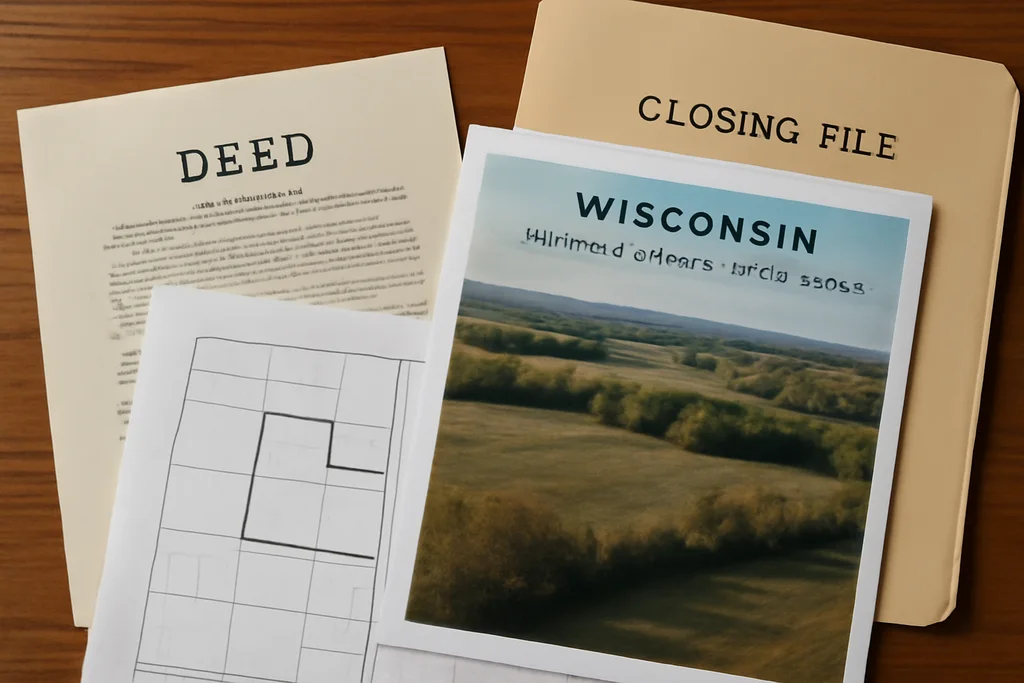
For a simple Wisconsin land sale between private parties, the essential documents are a written purchase agreement, the deed (warranty for clear-title sales, quitclaim when title has gaps), a Wisconsin Real Estate Transfer Return (RETR), and a closing statement. Title insurance is not legally required but most buyers demand it, and the buyer's title company usually orders it.
When the sale involves probate, multiple heirs, or liens, add probate letters, heirship affidavits, lien-release documents, and sometimes a court order. Selling to a developer or investor typically adds an environmental questionnaire, soil borings, and site-feasibility studies. Every additional document is a chance for the deal to slow or fall apart, which is why experienced sellers keep the paper trail clean from the start.
Sale Contract, Land Contract, and Documents You Need
The Wisconsin Vacant Land Disclosure Report is the document that protects you legally. It asks about known boundary disputes, environmental issues, flood zones, shared access, wells, septic, easements, and similar. Honest, specific answers prevent most post-closing lawsuits. "Not known" answers are acceptable when you genuinely don't know - but a good-faith effort to investigate beats blanket "unknown" responses in court.
Deed choice matters. A warranty deed guarantees the seller owned clean title - it's what retail buyers expect and what title insurance typically requires. A quitclaim deed only transfers whatever interest the seller has, which works for inter-family transfers or deals where the buyer accepts title risk. Using the wrong deed type creates problems that surface years later when the buyer tries to sell.
Documents Needed to Sell Land and Close the Sale
Most land sales start with the deed, but the full document package is broader. To sell land by owner, you may need a purchase agreement, property tax records, a land survey, disclosure items, a title deed review, and a legal description that matches the county record. Those are the essential documents and documents you need before the sale process becomes real.
Potential buyers also want to know that the agreement reflects the correct purchase price, the terms of the sale, the planned closing date, and that the legal document trail supports the sale. If you sell your land with missing records, unclear property line information, or disclosure form issues, the closing attorney or title company will usually pause the file until the sale contract or land contract is complete.
The cleanest path is to organize the documents before you market the ground. That helps buyers move faster, reduces legal issues, supports the title deed review, and keeps the selling process from stalling late in the closing the sale stage. It is especially useful when you need to sell, are selling land without an agent, or are selling property with older paperwork.
Which Ownership Documents Matter Most
The deed is the starting point, but many sales need more than the last recorded deed. The title company may also request probate documents, trust certificates, entity resolutions, identification, prior conveyance papers, or payoff information tied to liens and taxes. The exact list depends on how the land is owned today.
Wisconsin sellers move faster when they collect those documents before accepting an offer. That gives the buyer and title company a realistic picture of what will be needed to close instead of discovering missing authority papers at the last minute.
Why Missing Paperwork Slows Closings
Missing paperwork usually matters because it creates uncertainty about authority, not because buyers love paperwork for its own sake. If the title company cannot confirm who owns the land and who can sign, they cannot safely insure the closing. That is where many delayed deals begin.
The best way to avoid that problem is to build a checklist early: deed, tract and tax details, survey if available, any probate or trust records, payoff statements, and photo identification for each signer. Once the file is organized, closing becomes much more predictable.
How Wisconsin Sellers Compare Their Options
Many Wisconsin owners start by comparing the same three paths: list the land, market it themselves, or work directly with a cash buyer. That comparison should include more than headline price. Sellers should look at how many people need to approve the deal, how quickly the property needs to close, how much cleanup or marketing work they want to handle, and whether they are comfortable waiting for a financed buyer.
A direct buyer is not always the highest-price path, but it can be the simplest path when the property has title issues, back taxes, difficult access, family complications, or a narrow buyer pool. On the other hand, a clean and highly marketable tract may justify more exposure if your main goal is maximizing price and you have time to wait.
Questions to Ask Before You Move Forward
Before signing anything, ask who is paying closing costs, whether the buyer can close without financing, what title issues have already been identified, and how long the offer remains open. If the property is inherited, owned by an LLC, or affected by unpaid taxes, those details should be raised early instead of being left for the closing table.
It is also worth asking what happens if the title search finds old liens, missing probate documents, or ownership gaps. A serious buyer or title company should be able to explain the next step clearly. When no one can explain the process, that usually means the deal is not as solid as it first appears.
How Title Work and Closing Usually Unfold
Once seller and buyer agree on terms, the file still needs title work, payoff review, deed preparation, and final coordination before money changes hands. That process is where many owners first see whether the deal is truly ready to close or whether hidden problems still need to be solved.
A good closing process gives the seller a clear sequence: open title, review exceptions, confirm payoff items, sign final documents, and record the deed. Even when the transaction is simple, treating the title phase seriously is what keeps a fast sale from turning into a messy one.
Steps to Sell Wisconsin Land
- Gather piece details. Find the county record, parcel number, tax status, deed, and any maps or surveys you already have.
- Decide your preferred sale path. Choose whether you want to list, sell by owner, or ask for a direct cash offer.
- Review written terms. Look at price, closing costs, timeline, contingencies, and who pays title expenses.
- Close with proper paperwork. Use a title company or qualified closing professional so the deed and funds are handled correctly.
Common Questions
What paperwork should I gather before selling land?
Start with the deed, parcel number, tax bill, survey if you have one, and any estate or entity documents that show who is allowed to sign.
Do I need a realtor to sell Wisconsin land?
No. You can sell land yourself or work directly with a cash buyer. A realtor may help with marketing, but commissions and timeline should be part of the comparison.
How long does a Wisconsin land sale take?
A simple cash sale can close quickly after title is clear. Probate issues, liens, access problems, or ownership questions can add time.
What documents are usually needed to sell land in Wisconsin?
Most sales need a purchase agreement, deed preparation, identification, tax information, and any paperwork proving authority to sign.
Get a Cash Offer for Wisconsin Land
Sell Wisconsin Land buys vacant lots, inherited land, rural acreage, wooded lots, and unwanted Wisconsin property directly from owners. Share the ground details, review a no-obligation offer, and decide whether a direct sale works for you.
Sell Your Wisconsin Land for Cash
We buy land in every Wisconsin county with no fees, no commissions, and closings in as little as 2 weeks. Start with a free cash offer.
Ready to compare a direct cash offer? We buy land directly from owners for cash with no fees, no commissions, and no listing delays.